












The Way of Tea
"Denn Teeismus ist die Kunst, Schönheit zu verhüllen, um sie zu entdecken, und etwas anzudeuten, was man nicht zu enthüllen wagt. Er ist das feine Geheimnis, leise und doch gründlich über sich selbst zu lachen, und ist somit die gute Laune selbst - das Lächeln der Philosophie."
Okakura Kakuzō

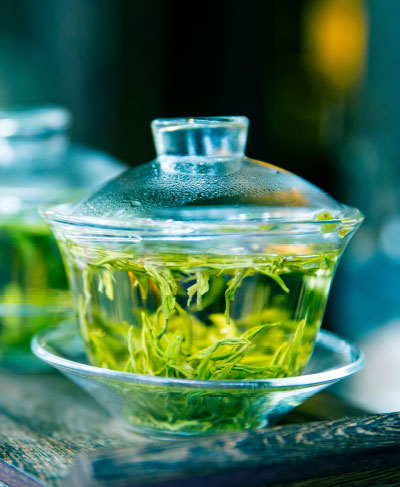
The ceremony known as Cha-no-yuhas its origins in the ninth century, when tea was introduced to Japan from China by a Buddhist monk. The first tea prepared in Japan was sencha, a refreshingly light tea with golden-green leaves, and today it is the most widely consumed variety of green tea. It wasn’t until the twelfth century that matcha tea was discovered. It is largely untreated and retains the earthy flavor of the ground tea leaves, which gives it a natural and distinctive character. Samurai soon began preparing matcha, and this gradually evolved into the cultural tradition we know today as the tea ceremony.
Until the 16th century, the enjoyment of tea was reserved for the upper classes. Today, Japanese tea plantations offer a wide selection of green tea for everyone, with varieties that can vary significantly depending on the season. Those who enjoy something exotic might want to try Gyokuro, for example, which—just like Matcha—is grown under the shade of bamboo mats. This high-quality variety has a savory umami flavor with a hint of sweetness and is the most expensive Japanese tea. The very same compounds that define its quality also make it a very healthy treat.
In the 16th century, the renowned tea master Sen no Rikyu established a set of guidelines that most schools follow today. He was also the one who defined the four fundamental principles of Chado: purity, tranquility, respect, and harmony.
In Japan, tea is much more than just a beverage. It represents an entire culture and has shaped art and architecture for centuries. Those who follow the “Way of Tea” are not only blessed with a long, healthy life, but also with the wisdom of generations.
Jundo / Purity
Guests at a tea ceremony follow a path through the garden to the entrance of the tea house. Until the host invites them inside, they must take a seat on a bench outside. While waiting for the tea ceremony to begin, they are often served a light appetizer accompanied by sake.

As soon as the copper gong sounds five times, people enter the room lined with tatami mats one by one—but not without first washing their hands at the entrance. Purity in the right places is one of the cornerstones of Japanese culture and offers the opportunity to leave one’s bad deeds and thoughts behind at the threshold. The dishes and utensils are also cleaned repeatedly before and during preparation.

The most important components (dōgu) of this set are the container for loose tea, the fresh-water vessel (mizusashi), and the iron kettle (kama) in which the tea is heated. In addition, there is the ladle (hishaku), the bamboo tea scoop (chashaku), and the bamboo whisk (chasen), which is used to whisk the matcha into a frothy consistency.
Chinmoku / Silence
The last guest to enter the tea room closes the door with an audible click to let the host know that he can begin. Greetings and bows are exchanged. Now all the guests are kneeling and watching the host as he carefully handles all the utensils, his movements so fluid and meditative that he seems to be working magic. Through years of training, the host has internalized the rituals, which encompass all traditional arts —from wearing the kimono to flower arranging (ikebana) and incense ceremony (kōdō). All of this is part of the aesthetic of a tea house and creates an experience that engages all the senses.

Aside from the formal phrases exchanged between the guests and the tea master, no one speaks during a tea ceremony. This used to be different, back when samurai would engage in discussions in the tea room and did not shy away from voicing their opinions even to warriors of higher rank. Just as the sword was laid aside at the entrance back then, social distinctions disappear in the tea room. This has not changed to this day; however, rather than a round of conversation, the tea ceremony has now become more of an opportunity for inner reflection, similar to meditation.
Sonkei / Respect
Although everyone who participates in a tea ceremony has a specific rank that determines their seating arrangement and role, this is not based on their social status but rather on their experience with the ritual. Apart from that, there are no hierarchies in the teahouse: Everyone is equal and together forms a whole, which is symbolized by the humble act of kneeling. The small size of the teahouse also contributes to the fact that there is no room here for social distinctions.

A smaller tea ceremony is held with four to five participants. The guest of honor engages in polite conversation with the tea master. As soon as the tea is ready, the guest of honor is the first to receive the tea bowl. He apologizes to the second guest for making him wait before taking a few sips. He compliments the host on the delicious tea and the beautiful tea set, then returns the bowl to him. The tea master wipes the bowl with a specially designated, carefully folded silk cloth—a purely symbolic gesture—before pouring fresh water into it with the ladle and stirring in the matcha. He then passes the bowl to the next guest, and the same procedure continues in turn.
The first guest must also bring the ceremony to a close by signaling to the tea master that everyone has had enough. The gathering comes to an end after about four hours. It becomes clear that participating in a traditional tea ceremony requires specific knowledge and experience. Even holding the tea bowl correctly is subject to certain rules.
Chōwa / Harmony
The season—which plays a major role in Japan’s nature-oriented culture—also determines the style of the tea ceremony. Whether the leaves outside are ablaze with color or the cherry blossoms are in bloom can be discerned, among other things, by the delicacies served with matcha tea. Before drinking can begin, these must first be tasted to, among other things, slightly mellow the bitter taste. The homemade sweets come in a wide variety of forms and are tailored to the colors of the season: in the fall, they are predominantly brown, while in the spring, light green or pink hues are preferred.
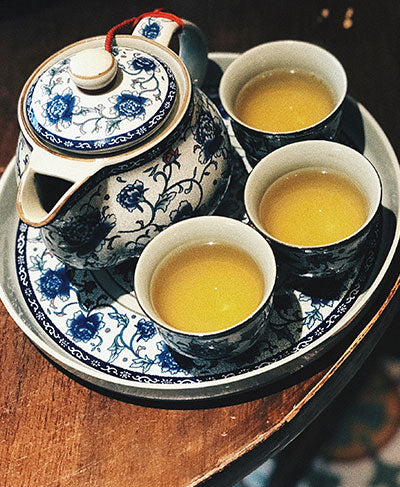
The method of preparing matcha also varies depending on the season: During the colder months, the water for the tea is boiled over a fire pit built into the ground. This helps retain heat better and creates a cozy atmosphere. In spring and summer, however, the kettle is placed on a raised, portable hearth. Since these hearths also vary in size, different utensils must be used. Even the materials and designs reflect the respective time of year: During cherry blossom season, the fine porcelain tea set features a floral pattern, while in winter, deeper, coarser bowls are used.

May is a special month for tea lovers: the first pot of the new tea year is ceremoniously inaugurated. Since the first harvest takes place in early May, this is the best time to enjoy sencha (the first spring harvest, also known as the early harvest, is called shincha ), when its fresh aroma is enriched with the finest nutrients. Aspiring tea masters have something special to look forward to: on this occasion, the head instructor personally prepares the tea for his students.
The tea ceremony is an expression of deeply rooted Japanese values and a tradition that continues to this day. Mindfulness in the present moment, respect for others, and the pursuit of beauty are just a few of the lessons one can learn on the path of tea.
On our website, we offer a variety of matcha products and the corresponding accessories .
This text was created in collaboration with the Oryoki brand.
The Oryoki brand aims to bring lasting joy. Literally translated, Oryoki means “that which contains just enough.”


Leave a comment (all fields required)