













White tea is one of the most traditional and, at the same time, most elegant types of tea in the world. Its production is relatively minimal, and its flavor is often delicate, floral, and subtle. Unlike heavily processed teas, white tea derives its character fromthe quality of the leaf, the terroir, and gentle processing. In recent decades, it has gained popularity worldwide—yet its roots lie deep in China’s traditional tea culture.
This blog post provides an overview of the origins, botanical basics, production, and various varieties of white tea, drawing on information from several specialized tea books and studies on tea.
1. The Origins and History of White Tea
The historical home of white tea is the Chinese province of Fujian, particularly in regions such as Fuding and Zhenghe. Over the centuries, a method of tea production developed there that is characterized by its extraordinary simplicity.
While many other teas involve complex processing steps—such as rolling, oxidizing, or roasting—the production of white tea is traditionally limited to picking, withering, and drying. As a result, the leaf remains largely in its natural state.
Tea researchers point out that white tea likely originated from early forms of tea production, before more complex processing methods were developed. In this sense, white tea is often considered one of the most traditional types of tea.
Tea historian James Norwood Pratt describes white tea as a category that is particularly dependent on the quality of the raw material. Since only minimal processing takes place, the production process cannot mask any flaws—every nuance of the leaf is preserved.
2. Botany and Raw Materials – The Basis of White Tea
Like all traditional teas, white tea also comes from the Camellia sinensis tea plant. The key difference, however, is which part of the plant is used.
Typically, high-quality white tea is made from:
young buds
very young leaves
or a combination of buds and leaves
used.
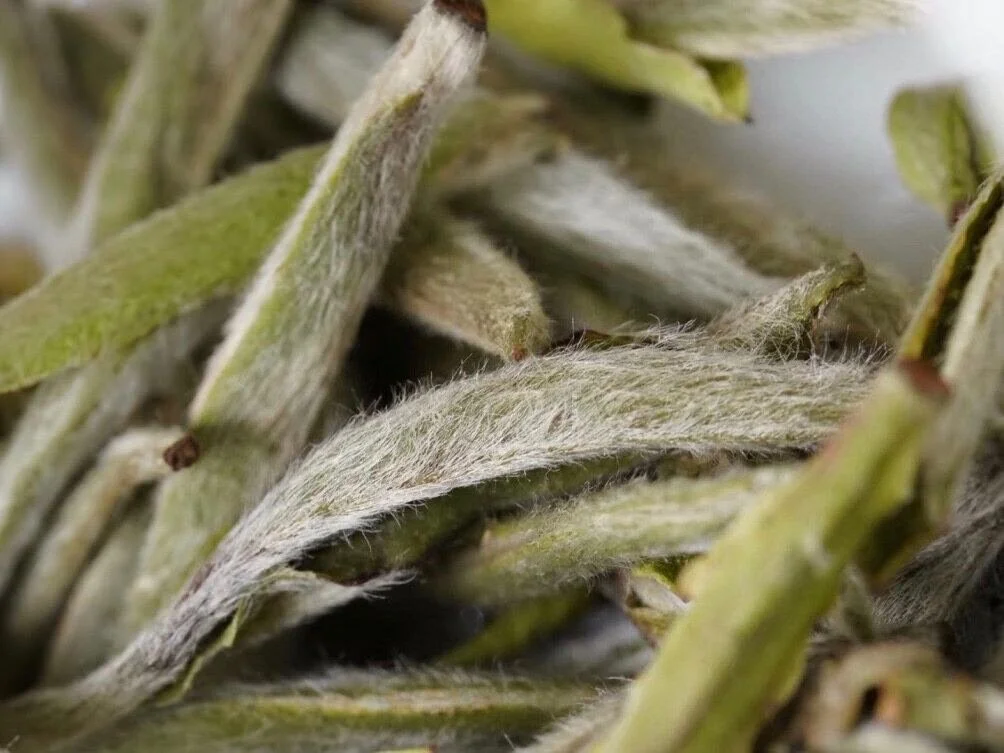
The buds are covered with fine white hairs, which give the tea its characteristic silvery appearance. These hairs reflect light and protect the young shoots from intense sunlight.
Tea scientists emphasize that these young parts of the plant are particularly rich in amino acids, polyphenols, and aroma precursors. This explains the mild, often slightly sweet character of many white teas.
Tea researcher Harold McGee therefore describes white tea as a product in which the natural biochemistry of the leaf is particularly well preserved.
3. Manufacturing – Minimalist Workmanship
Compared to other teas, the production of white tea is relatively simple, yet at the same time extremely demanding.
The most important steps are:
1. Picking
Harvesting usually takes place in the spring, when the first young shoots appear. Depending on the quality, only buds or buds with young leaves are harvested.
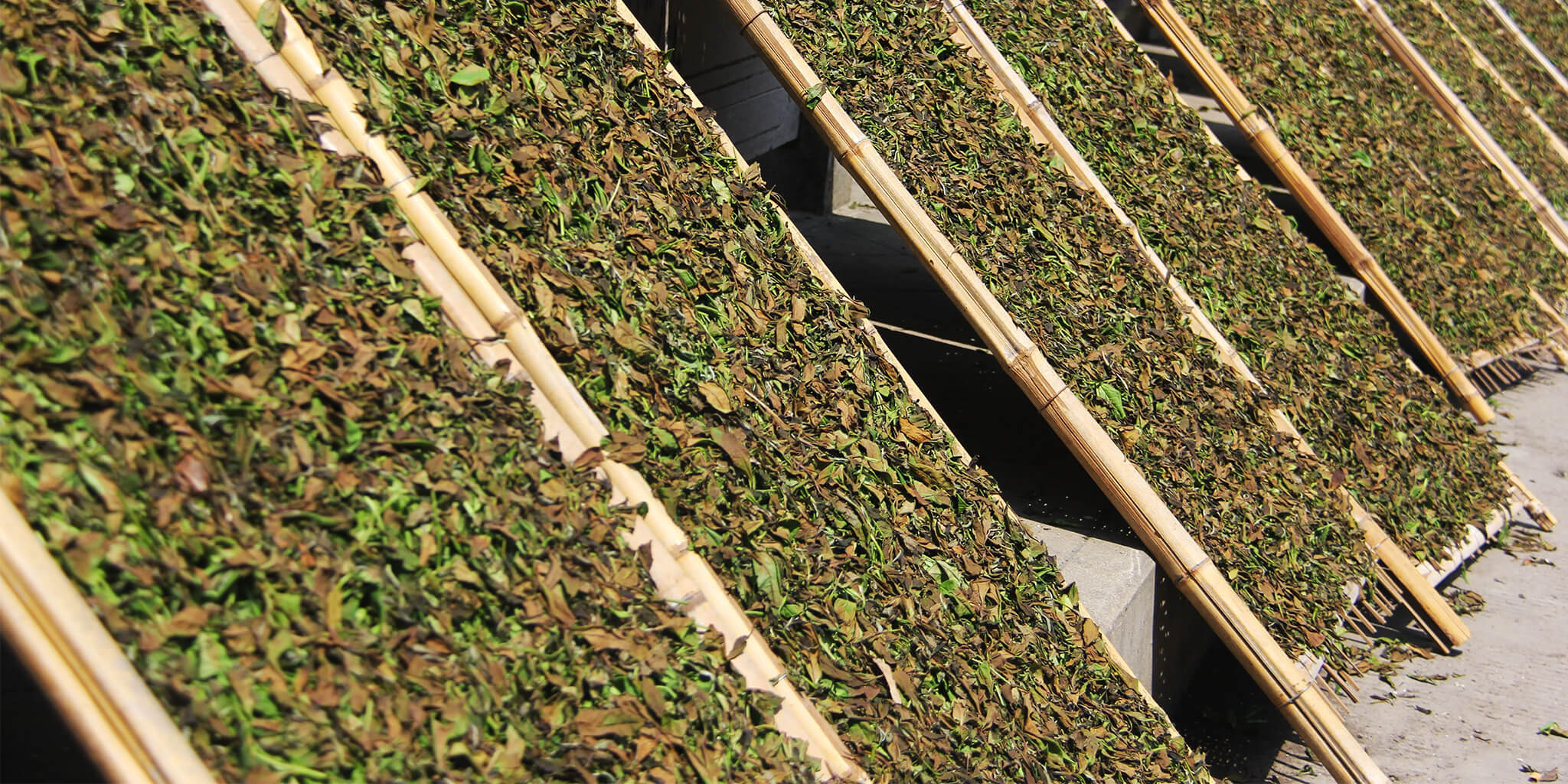
2. Wilting
After harvesting, the leaves are spread out on bamboo mats or drying racks. There, they slowly lose moisture and begin to oxidize slightly.
3. Drying
Finally, the tea is dried either in the sun or under controlled heat.
Unlike green tea , the leaves are not heated to immediately stop oxidation, and unlike black tea, they are not rolled or heavily oxidized. As a result, the structure of the leaves remains largely intact.
Tea books such as *The Tea Enthusiast’s Handbook* by Mary Lou Heiss and Robert J. Heiss emphasize that this gentle processing is the main reason for the delicate and transparent aromas of white teas.
4. Common Types of White Tea
Within the white tea category, there are several well-known varieties that differ primarily in the type of tea leaves used.
Silver Needle (Yun Shan Yin Zhen)
Silver Needle is considered one of the highest-quality types of white tea.
Features:
only young buds
silvery, hairy surface
very light-colored infusion
a particularly delicate aroma
The flavor is often described as delicate, floral, and slightly sweet.

Pai Mu Tan (Bai Mu Dan)
In addition to buds, Bai Mu Dan also contains young leaves.
Typical characteristics:
a slightly stronger flavor
a hint of fruitiness
A fuller-bodied tea than Silver Needle
This variety is considered more approachable and aromatic, while Silver Needle often has a more subtle flavor.

5. Taste and Aroma Profile
White tea is known for its delicate and complex aroma.
Typical flavors may include:
Flowers
Honey
Melon
fresh hay
a hint of fruitiness
Compared to green tea, white tea often has a milder, less grassy flavor, while at the same time being significantly lighter than black tea.
Sensory diversity depends heavily on factors such as:
Origin
Climate
Picking Standard
Processing
from.
6. White Tea and Aging
An interesting phenomenon is that some white teas can age. Varieties such as Shou Mei, in particular, are sometimes stored for years.
As we get older, our sense of taste can change:
fruiter
deeper
slightly woody
This aspect is reminiscent of the aging process of certain dark teas, even though the process is less pronounced.
Conclusion
White tea demonstrates just how much character the plant itself possesses. Thanks to its minimalist processing, many of the leaf’s characteristics are preserved, allowing its origin, climate, and harvesting standards to come through particularly clearly.
It is precisely this closeness to nature that makes white tea such a fascinating category within the world of tea. It embodies a tea philosophy centered on restraint, the quality of the raw materials, and careful processing.


Leave a comment (all fields required)