








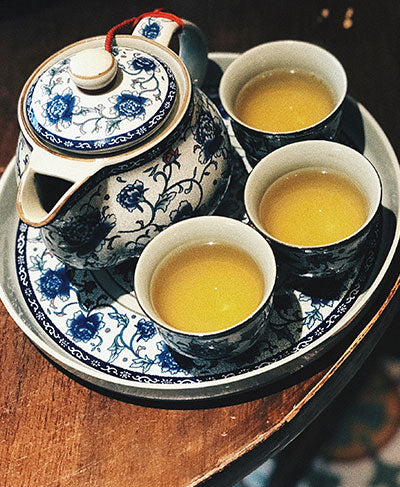




Yellow tea is one of the rarest and least well-known classic tea varieties in the world. Although it comes from the same plant as green, black, or white tea, its unique processing gives it a character all its own. Its flavor is considered smooth, rounded, and elegant—often with fewer grassy notes than green tea and a delicate, mild sweetness.
Precisely because yellow tea is produced only in small quantities and traditional production techniques are labor-intensive, it is still considered a rarity in the world of tea. This blog post explores the origin, processing, varieties, and distinctive flavors of yellow tea—drawing on knowledge from various specialized tea books and classic tea literature.
1. The Origins and History of Yellow Tea
Yellow tea originated in China, where it has been produced for centuries. Historically, yellow tea was closely associated with courtly tea culture and was sometimes regarded as particularly valuable. At times, certain varieties were considered tribute tea—that is, tea delivered to the imperial court.
Compared to green tea, however, yellow tea has always remained a smaller category. This is primarily due to its more labor-intensive production process, which requires more experience and time.
Tea historians often describe yellow tea as a middle ground between green and white tea: fresh and lively like green tea, yet milder and rounder in character.
2. Botany and Raw Materials – The Basis of Yellow Tea
Like all true teas, yellow tea also comes from the Camellia sinensis plant. However, what matters most is which parts of the plant are used and how carefully they are harvested.
The following are most commonly used for high-quality yellow teas:
young buds
tender, fresh leaves
Depending on the variety, either buds only or buds with leaves
Since yellow tea undergoes only minimal processing, the quality of the raw material plays a crucial role. Defective or coarse leaves are very difficult to compensate for later on.
Many famous yellow teas are made from particularly tender spring harvests, when the plant produces new shoots after winter.

3. Production – The Key Difference from Green Tea
In the early stages of production, yellow tea is often similar to green tea. The freshly picked leaves are first heated to stop enzymatic oxidation.
However, the crucial additional step is what is known as:
Men Huang – “Turning Yellow” or Gentle Post-Steaming
The leaves, while still warm, are placed in cloths, paper, or special containers and left to rest for a certain amount of time. During this controlled period of heat and humidity, the leaves slowly undergo a transformation.
The result:
Green, grassy notes are reduced
Bitterness can be alleviated
The flavor becomes smoother and rounder
The leaf takes on slightly yellowish hues
It is precisely this additional processing step that makes yellow tea so labor-intensive—and explains why it is much less common than green tea.
4. Well-Known Varieties of Yellow Tea
Junshan Yinzhen
One of the most famous varieties of all comes from Junshan Island in Dongting Lake in China.
Features:
delicate, uniform buds
a light, clear infusion
elegant, sweet, and mild
Junshan Yinzhen is considered a prestigious tea and is often cited as one of the most classic yellow teas.
Meng Ding Huang Ya
This variety originates from Sichuan and is also one of the traditional yellow teas.
Typical examples include:
young buds
delicate body
floral and slightly nutty notes
Huoshan Huang Ya
Another well-known example with a slightly more robust character.
Often described as:
soft
slightly sweet
delicate, plant-based with a gentle depth
5. Taste and Aroma Profile
Yellow tea is often described as particularly harmonious. It combines freshness with mildness and has less pronounced notes than many green teas.
Typical flavor notes:
a slight sweetness
delicate floral notes
subtle nuttiness
subtle freshness
soft, rounded reverberation
If you find green tea too astringent or too grassy, yellow tea is often an exciting alternative.

6. Why Yellow Tea Is So Rare
There are several reasons why yellow tea is such a rarity:
1. Complex manufacturing process
The additional Men-Huang step requires experience, precision, and time.
2. Low production volumes
Many varieties are produced only regionally and in small batches.
3. High demand despite low brand awareness
Yellow tea is prized by connoisseurs, but it is rarely found on the mass market.
4. Challenging Quality Assurance
Even small variations in temperature or humidity can affect the result.
7. How to Make Yellow Tea
To bring out the delicate flavors of yellow tea, it is best to brew it gently.
Recommendation:
Water temperature: approx. 75–85 °C
Steeping time: 1–3 minutes
Can be steeped multiple times
Water that is too hot can mask subtle flavors and bring out bitterness.
Conclusion
Yellow tea is one of the most fascinating—yet at the same time most underrated—categories in the world of tea. Thanks to its unique production process, it combines the freshness of green tea with a noticeably smoother and more harmonious texture.
If you're looking to discover teas beyond the well-known classics, yellow tea is the way to go:
Elegance
Rarity
traditional craftsmanship
subtle, complex flavors
Precisely because yellow tea isn't something you drink every day, every cup remains something special.


Leave a comment (all fields required)